
Activated Carbon for Water Treatment: How It Removes PFAS, Chlorine, Odors and Discoloration from Water
Release time:
2026-08-18
Author:
CarlCarbon
Source:
CarlCarbon
Abstract
Activated Carbon for Water Treatment: How It Removes PFAS, Chlorine, Odors and Discoloration from Water
 |  |
Introduction: The Role of Activated Carbon in Water Treatment
Clean and safe water is essential for drinking water systems, industrial processes, and environmental protection. As water quality requirements continue to increase, effective filtration technologies are becoming increasingly important for removing unwanted contaminants.
Activated Carbon for Water Treatment is one of the most widely used filtration solutions because of its excellent adsorption capacity, large surface area, and ability to reduce a broad range of organic and chemical pollutants.
Activated carbon works by capturing contaminants inside its highly developed pore structure. It is commonly used to remove or reduce:
PFAS (per- and polyfluoroalkyl substances)
Residual chlorine
Unpleasant odors and tastes
Color-causing compounds
Volatile organic compounds (VOCs)
Organic chemicals
Among different activated carbon materials, coconut shell activated carbon has become a preferred choice for many water treatment applications due to its high micropore volume, low ash content, and excellent adsorption performance.
This article explains how activated carbon works in water treatment, how it removes PFAS, chlorine, odors, and discoloration, why coconut shell activated carbon performs well, and how to select the right activated carbon solution for different filtration systems.
How Activated Carbon Works in Water Treatment
Activated carbon removes contaminants mainly through a process called adsorption. Unlike filtration methods that physically block particles, activated carbon captures dissolved molecules by attracting them to its internal surface structure.
During production, activated carbon develops millions of microscopic pores that create a very large internal surface area. When contaminated water passes through activated carbon, unwanted compounds enter these pores and become attached to the carbon surface.
The basic process is:
Contaminated water → Activated carbon contact → Contaminants adsorbed into carbon pores → Cleaner water output
The effectiveness of activated carbon filtration depends on several factors:
Carbon pore structure
Surface area
Contact time
Water temperature
Contaminant concentration
Activated carbon quality
A properly designed activated carbon system can continuously reduce a wide range of organic contaminants while maintaining stable water quality.
Why Adsorption Performance Matters
Not all activated carbon products provide the same treatment performance.
The adsorption ability of activated carbon depends largely on:
Micropore and mesopore distribution
Raw material source
Activation process
Surface chemistry
Different contaminants require different pore structures. For example, small organic molecules and PFAS compounds are strongly influenced by microporous structures, while larger molecules may require larger transport pores.
This is why selecting the right activated carbon type is essential for specific water treatment goals.
What Contaminants Does Activated Carbon Remove from Water?
One of the major advantages of activated carbon filtration is its ability to reduce multiple contaminants in a single treatment step.
PFAS Removal
PFAS are a group of highly persistent chemicals commonly known as “forever chemicals.” They have attracted increasing attention because of their environmental persistence and potential health concerns.
Activated carbon can effectively reduce many PFAS compounds through adsorption.
Factors affecting PFAS removal include:
Activated carbon type
Carbon quality
Contact time
PFAS concentration
Filter design
High-quality activated carbon with suitable pore structures provides more adsorption sites and improves PFAS reduction performance.
Residual Chlorine Removal
Chlorine is widely used for water disinfection, but excessive chlorine can affect water taste, odor, and industrial processes.
Activated carbon effectively reduces residual chlorine through adsorption and catalytic reactions.
Benefits include:
Improved taste
Reduced chlorine odor
Better water quality for industrial applications
Odor and Taste Improvement
Many unpleasant tastes and odors in water are caused by organic compounds.
Activated carbon can reduce:
Musty odors
Organic smells
Unpleasant tastes
This makes activated carbon widely used in drinking water filtration systems.
Color Reduction and Organic Compound Removal
Water discoloration is often caused by dissolved organic matter, natural organic compounds, and chemical contaminants.
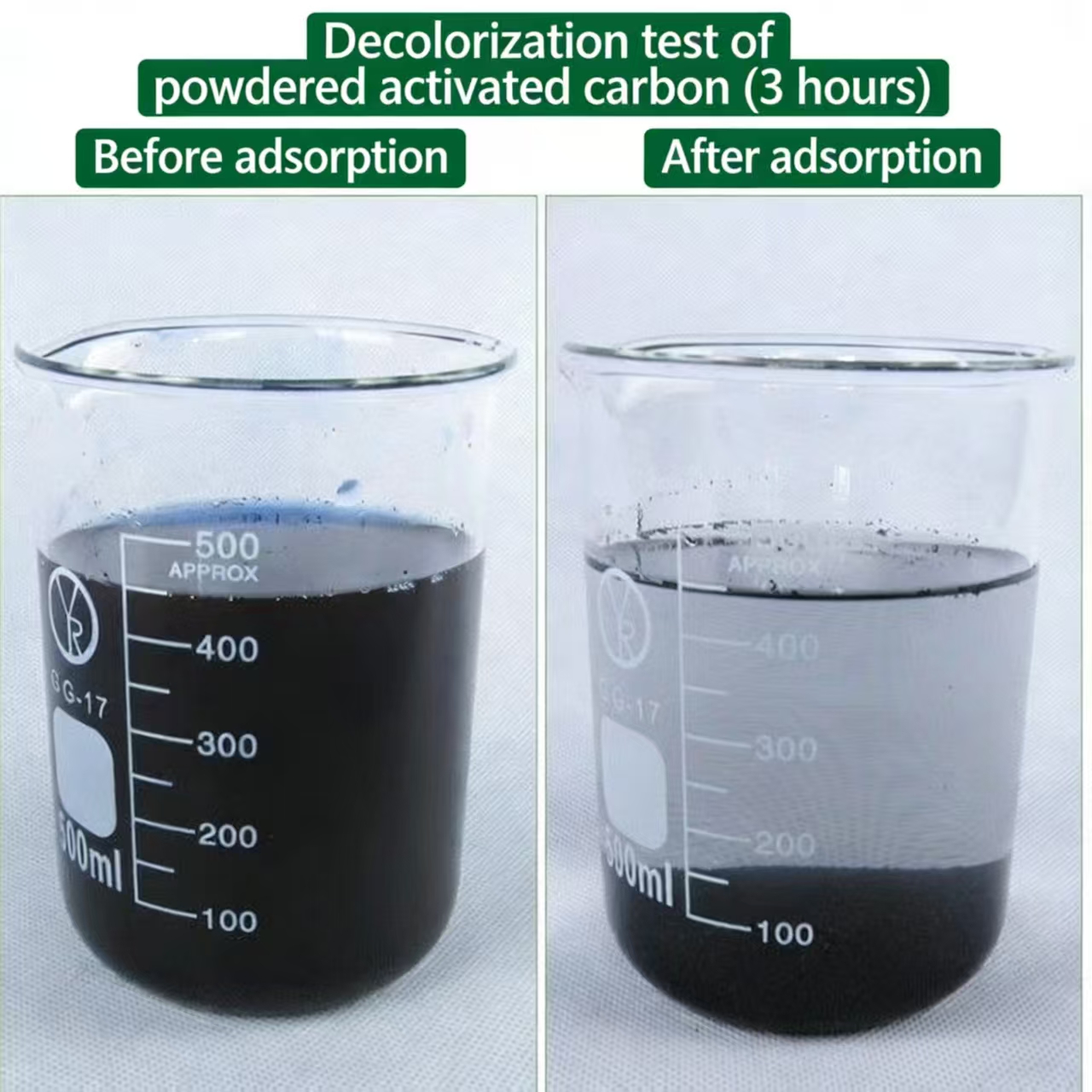
Activated carbon helps improve water appearance by reducing color-causing substances and organic impurities.
Activated Carbon for PFAS Removal: How Does It Work?
PFAS removal has become one of the most important applications of activated carbon in advanced water treatment.
PFAS molecules contain carbon-fluorine bonds, which are extremely stable and difficult to break down naturally. Activated carbon does not destroy PFAS molecules. Instead, it captures them through adsorption and prevents them from remaining in treated water.
How Activated Carbon Captures PFAS
PFAS molecules are attracted to the internal surfaces of activated carbon through:
Hydrophobic interactions
Surface adsorption
Pore filling effects
The effectiveness depends on:
Carbon surface area
Micropore distribution
PFAS chain length
Water chemistry
Long-chain PFAS compounds are generally easier to adsorb than shorter-chain PFAS compounds because of differences in molecular characteristics.
What Type of Activated Carbon Works Best for PFAS?
Different activated carbon types have different PFAS removal capabilities.
Important factors include:
High micropore volume
Large adsorption capacity
Suitable pore size distribution
Long service life
Coconut shell activated carbon is often selected for PFAS treatment because its microporous structure provides strong adsorption sites for many PFAS compounds.
Why Coconut Shell Activated Carbon Is Effective for Water Treatment
Activated carbon can be produced from different raw materials, including coal, wood, and coconut shells. Among these options, coconut shell activated carbon has unique advantages for many water treatment applications.
Highly Developed Microporous Structure
Coconut shell activated carbon naturally develops a high proportion of micropores after activation.
These micropores provide:
Large adsorption capacity
Efficient contaminant capture
Stable filtration performance
This makes coconut shell carbon especially suitable for removing small organic molecules and PFAS compounds.
High Purity and Low Ash Content
High-quality coconut shell activated carbon typically has:
Low ash content
Stable chemical properties
Excellent adsorption efficiency
Lower ash content means more available adsorption sites for contaminant removal.
Strong Mechanical Strength
Activated carbon used in filtration systems must maintain structural stability during operation.
High hardness helps:
Reduce carbon breakdown
Extend filter life
Maintain consistent performance
Activated Carbon vs Reverse Osmosis for PFAS and Water Treatment
Activated carbon filtration and reverse osmosis are two important technologies used for water purification.
Activated Carbon Filtration
Advantages:
Lower energy consumption
Simple operation
Effective removal of organic contaminants
Improves taste and odor
Activated carbon is commonly used for:
PFAS reduction
Chlorine removal
VOC removal
Organic contaminant control
Reverse Osmosis Filtration
Reverse osmosis uses a semi-permeable membrane to remove dissolved substances.
Advantages:
High removal efficiency for many dissolved ions
Suitable for high-purity water production
However, reverse osmosis systems usually require:
Higher operating pressure
More maintenance
Additional wastewater management
The choice between activated carbon and reverse osmosis depends on:
Water quality requirements
Target contaminants
Operating costs
System design
In many applications, activated carbon is selected as an efficient and economical treatment solution.
Types of Activated Carbon Filters: GAC vs Carbon Block
Activated carbon is available in different filter forms depending on the application.
Granular Activated Carbon (GAC)
GAC consists of loose activated carbon particles.
Advantages:
High flow capacity
Suitable for large-scale systems
Effective contaminant adsorption
Common applications include:
Drinking water treatment
Industrial filtration
Municipal water systems
Carbon Block Filters
Carbon block filters compress activated carbon into a solid filter structure.
Advantages:
Longer contact time
High contaminant reduction efficiency
Better control of filtration performance
Carbon block filters are often used where higher PFAS reduction and fine filtration are required.
The selection between GAC and carbon block depends on:
Flow rate requirements
Contaminant type
Filter design
Treatment goals
Key Factors When Choosing Activated Carbon for Water Treatment
Selecting the right activated carbon requires evaluating several technical factors.
Surface Area and Adsorption Capacity
Higher surface area generally provides more adsorption sites.
Pore Structure
Different contaminants require different pore distributions.
Micropores are especially important for:
PFAS
Organic compounds
Small molecular contaminants
Iodine Number
Iodine number is commonly used to evaluate activated carbon adsorption capacity.
Contact Time
Longer contact time allows more contaminants to interact with carbon surfaces.
Raw Material Quality
The raw material affects:
Pore development
Purity
Performance consistency
For many advanced water treatment applications, coconut shell activated carbon provides a strong balance between adsorption performance and durability.
Activated Carbon Filter Maintenance and Replacement
Even high-quality activated carbon requires proper maintenance to maintain performance.
Activated Carbon Saturation
Over time, adsorption sites become occupied by contaminants.
When activated carbon reaches saturation:
Removal efficiency decreases
Contaminants may pass through the filter
When Should Carbon Filters Be Replaced?
Replacement depends on:
Water quality
Contaminant concentration
Treatment capacity
Manufacturer recommendations
Visual inspection alone is not enough because saturated carbon may continue to look unchanged.
Regular monitoring and proper replacement schedules help maintain reliable filtration performance.
FAQ: Activated Carbon for Water Treatment
Does activated carbon remove PFAS from water?
Yes. High-quality activated carbon can reduce many PFAS compounds through adsorption. Performance depends on carbon type, system design, and operating conditions.
Does activated carbon destroy PFAS?
No. Activated carbon does not destroy PFAS molecules. It captures PFAS through adsorption and holds them within its pore structure.
What type of activated carbon works best for PFAS removal?
Activated carbon with high micropore volume and strong adsorption capacity is generally preferred. Coconut shell activated carbon is widely used because of its developed microporous structure.
Can activated carbon remove chlorine from water?
Yes. Activated carbon effectively reduces residual chlorine and improves water taste and odor.
What contaminants can activated carbon not remove?
Activated carbon is not designed to remove all contaminants, such as many dissolved minerals, salts, and certain inorganic compounds. Other technologies may be required depending on water quality goals.
How long does activated carbon last?
The service life depends on contaminant concentration, water usage, carbon capacity, and system design.
Conclusion: Choosing the Right Activated Carbon for Water Treatment
Activated carbon is one of the most effective and versatile filtration materials for modern water treatment. Through adsorption, it can reduce PFAS, residual chlorine, odors, discoloration, and many organic contaminants.
Among different carbon materials, coconut shell activated carbon provides excellent performance due to its high microporous structure, purity, and stable adsorption capacity.
Selecting the right Activated Carbon for Water Treatment requires understanding contaminant characteristics, filtration system requirements, and carbon performance factors.
With proper carbon selection and system management, activated carbon filtration can provide reliable, efficient, and sustainable water purification solutions for residential, commercial, and industrial applications.
Recommended Reading
8 Hidden Reasons for Low Gold Recovery in CIP/CIL Plants — And How to Fix Them
2026-05-29
Activated Carbon for Gold Recovery: CIP, CIL Process, Carbon Selection and Regeneration Guide
2026-09-30
Understanding the Sources of Activated Carbon: Coconut Shells, Coal & Wood
2026-05-21
2026-09-20
Coconut Shell Activated Carbon: A Complete Guide
2026-07-24
Get a customized solution
Filling in your phone and email information will help us get in touch with you in a timely manner and resolve your issue as soon as possible.