
Activated Carbon for Gold Extraction: Complete Guide to Gold Recovery Using CIP, CIL and CIC Processes
Release time:
2026-08-18
Author:
CarlCarbon
Source:
CarlCarbon
Abstract
Activated Carbon for Gold Extraction: Complete Guide to Gold Recovery Using CIP, CIL and CIC Processes
 |  |
Introduction: Activated Carbon in Gold Extraction and Recovery
Gold recovery is one of the most important applications of activated carbon in the mining industry. During modern gold processing, cyanide leaching is commonly used to dissolve gold from ore and form soluble gold cyanide complexes. Activated carbon is then introduced to capture these dissolved gold compounds through adsorption, allowing mining operations to efficiently recover valuable gold.
Activated Carbon for Gold Extraction is widely used in Carbon-in-Pulp (CIP), Carbon-in-Leach (CIL), and Carbon-in-Column (CIC) processes because of its excellent adsorption capacity, chemical stability, and mechanical strength.
Among different activated carbon materials, coconut shell activated carbon has become the preferred choice for many gold recovery operations. Its highly developed microporous structure, high hardness, low abrasion rate, and stable performance make it suitable for continuous circulation in demanding mining environments.
Choosing the right gold recovery activated carbon directly affects gold loading capacity, recovery efficiency, carbon consumption, and overall operating costs. This guide explains how activated carbon works in gold extraction, why coconut shell carbon is widely used, the differences between CIP, CIL, and CIC processes, key carbon performance factors, and how to select a reliable activated carbon supplier.
How Activated Carbon Works in Gold Recovery
The main function of activated carbon in gold recovery is to adsorb dissolved gold from cyanide-based solutions.
During the gold extraction process, crushed ore is treated with cyanide solution. The gold reacts with cyanide and oxygen, forming a soluble gold cyanide complex. This allows gold to move from solid mineral particles into the liquid phase.
The general process is:
Gold ore crushing → Cyanide leaching → Gold cyanide solution → Activated carbon adsorption → Loaded carbon → Gold recovery
Activated carbon contains millions of microscopic pores that create a large internal surface area. These pores provide adsorption sites where gold cyanide complexes attach to the carbon surface.
The performance of gold recovery activated carbon depends on several properties:
Adsorption capacity
Surface area
Micropore distribution
Particle size
Mechanical hardness
Attrition resistance
High-quality activated carbon can absorb large amounts of gold while maintaining its physical structure during repeated processing cycles.
Unlike ordinary activated carbon used for water purification, gold extraction carbon is specifically designed for precious metal recovery. It requires optimized pore structures that allow efficient adsorption of gold complexes while maintaining low carbon loss.
Why Coconut Shell Activated Carbon Is Ideal for Gold Extraction
Coconut shell activated carbon is widely recognized as one of the most suitable carbon materials for gold recovery applications.
The reason is its unique pore structure. During carbonization and activation, coconut shells develop a high concentration of micropores, which are highly effective for capturing gold cyanide complexes.
High Microporous Structure for Gold Adsorption
Gold recovery requires activated carbon with suitable pore characteristics.
Coconut shell activated carbon provides:
High micropore volume
Excellent adsorption sites
Stable pore distribution
Strong gold loading capacity
Micropores play the most important role in gold adsorption because gold cyanide complexes are relatively small molecules that can efficiently enter these pore structures.
High Hardness and Low Attrition Rate
In CIP and CIL plants, activated carbon is continuously moved between adsorption tanks, screens, pumps, and regeneration systems.
Poor-quality carbon may break into smaller particles, causing:
Carbon loss
Gold loss
Reduced recovery efficiency
Higher replacement costs
Coconut shell activated carbon naturally has high mechanical strength, allowing it to maintain particle integrity during long-term operation.
Coconut Shell Carbon vs Coal-Based Activated Carbon
Different raw materials create different pore structures.
| Property | Coconut Shell Activated Carbon | Coal-Based Activated Carbon |
|---|---|---|
| Main pore structure | Microporous | More mesoporous |
| Gold adsorption performance | Excellent | Good |
| Hardness | High | Moderate |
| Attrition resistance | Strong | Lower |
| Carbon loss during operation | Lower | Higher |
For gold extraction applications, coconut shell activated carbon provides advantages because its microporous structure matches the adsorption requirements of gold cyanide complexes.
CIP, CIL and CIC Gold Recovery Processes Explained
Activated carbon is mainly used in three gold recovery processes: Carbon-in-Pulp (CIP), Carbon-in-Leach (CIL), and Carbon-in-Column (CIC).
Although these processes operate differently, all rely on activated carbon to capture dissolved gold efficiently.
Carbon-in-Pulp (CIP) Process
The CIP process separates the leaching and adsorption stages.
The typical workflow includes:
Crushing and grinding gold ore
Cyanide leaching to dissolve gold
Adding activated carbon into the slurry
Adsorption of gold cyanide complexes
Removing loaded carbon for gold recovery
CIP gold recovery is widely used because it provides good control over leaching and adsorption conditions.
Carbon-in-Leach (CIL) Process
The CIL process combines gold leaching and carbon adsorption in the same tanks.
During CIL gold recovery:
Cyanide dissolves gold from ore
Activated carbon is present during leaching
Gold is immediately adsorbed onto carbon
The advantage of CIL is faster adsorption and reduced gold loss in solution.
Carbon-in-Column (CIC) Process
CIC is commonly used for recovering gold from clear solutions, especially in heap leaching operations.
Gold-bearing solution passes through activated carbon columns, where dissolved gold is captured by carbon.
The selection between CIP, CIL, and CIC depends on:
Ore characteristics
Gold concentration
Processing conditions
Plant design
However, all processes require high-performance gold recovery carbon with excellent adsorption ability and physical durability.
Key Performance Factors of Activated Carbon for Gold Extraction
Selecting activated carbon for gold extraction requires evaluating multiple performance indicators rather than relying on a single specification.
Iodine Number and Adsorption Capacity
The iodine number is commonly used to indicate the adsorption capacity of activated carbon.
A higher iodine number generally reflects greater micropore development and stronger adsorption potential.
Particle Size and Mesh Size
Particle size affects:
Adsorption speed
Carbon movement
Screening efficiency
Carbon loss
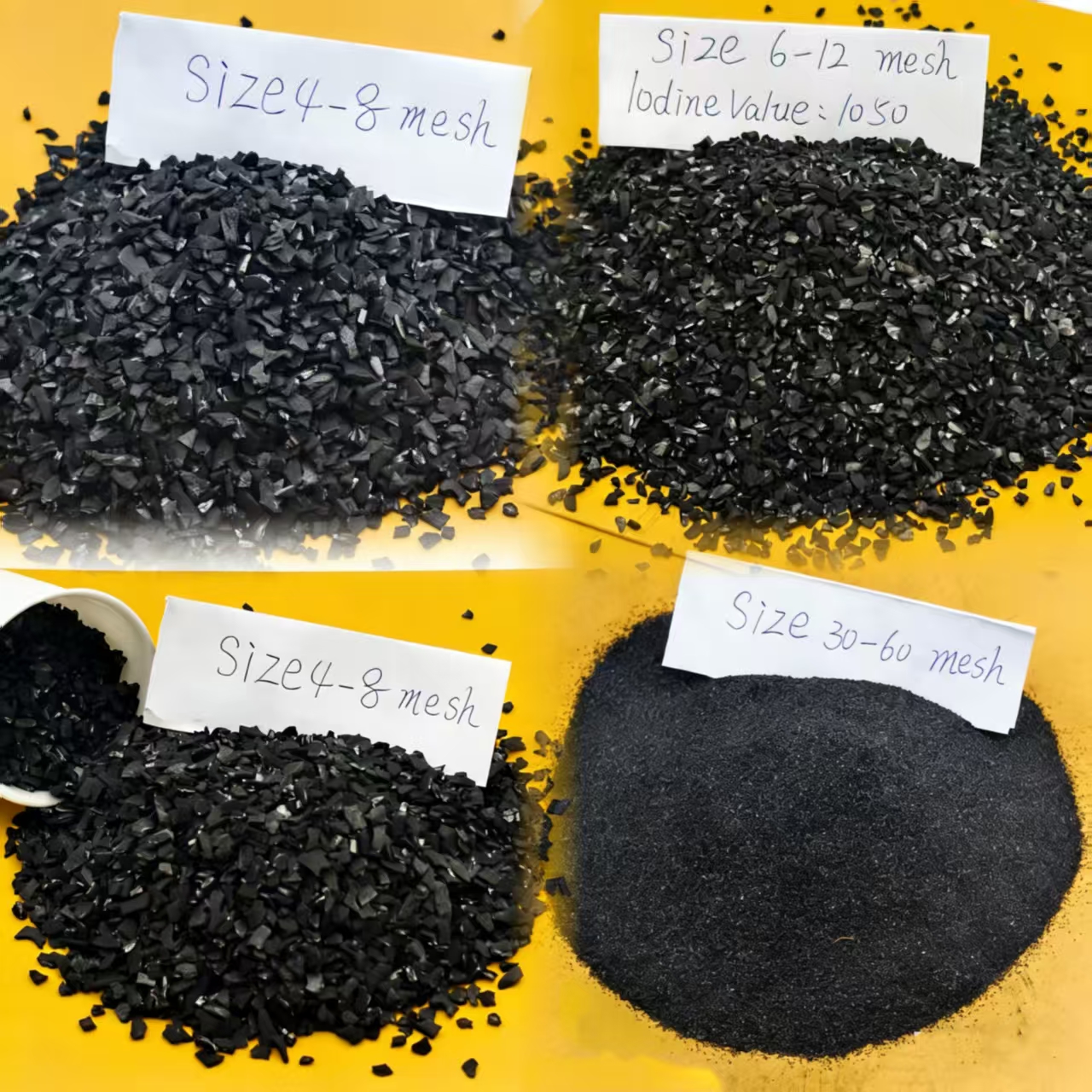
Common gold recovery carbon sizes include:
6×12 mesh
8×16 mesh
12×30 mesh
The suitable size depends on plant design and operating conditions.
Hardness and Attrition Resistance
High hardness is essential because carbon particles experience continuous mechanical stress.
Strong attrition resistance helps maintain:
Stable particle size
Lower carbon consumption
Longer service life
Ash Content and Chemical Stability
Low ash content helps maintain adsorption performance by reducing inactive mineral components inside carbon pores.
Activated Carbon Manufacturing Process for Gold Recovery
The quality of gold recovery activated carbon depends heavily on the manufacturing process.
A reliable production process includes several key stages.
Coconut Shell Carbonization
Raw coconut shells are converted into carbon materials through controlled heating.
This step creates the basic carbon structure required for further activation.
Activation Process
During activation, carbonized material is treated under controlled conditions to develop adsorption pores.
Proper activation determines:
Surface area
Micropore volume
Adsorption performance
Screening and Particle Size Control
After activation, carbon particles are screened to achieve consistent sizes suitable for CIP, CIL, and CIC operations.
Particle consistency helps improve:
Flow performance
Recovery stability
Carbon handling efficiency
Quality Testing Before Shipment
Professional manufacturers evaluate:
Iodine number
Moisture content
Ash content
Hardness
Particle size distribution
Adsorption performance
Consistent manufacturing control ensures stable gold recovery performance for mining customers.
Improving Gold Recovery Efficiency Through Carbon Management
Even high-quality activated carbon requires proper management to achieve maximum performance.
Important factors include:
Maintaining Proper Carbon Concentration
Insufficient carbon concentration may reduce gold recovery, while excessive carbon increases operating costs.
Controlling Carbon Loss
Carbon loss can directly increase production expenses.
Reducing abrasion and maintaining proper screening systems help minimize carbon consumption.
Regeneration and Reuse
Activated carbon can often be regenerated and reused after gold stripping.
Regeneration restores adsorption activity and extends carbon service life.
Common regeneration methods include:
Thermal regeneration
Acid washing
Controlled reactivation
Effective regeneration improves cost efficiency and supports sustainable gold recovery operations.
How to Choose the Right Gold Recovery Carbon Supplier
Selecting a reliable activated carbon supplier is important for long-term mining performance.
A qualified supplier should provide:
Consistent Product Quality
The supplier should have strict quality control systems and stable production standards.
Manufacturing Capability
A real manufacturer should control:
Raw material selection
Carbonization
Activation
Screening
Testing
Technical Support
Experienced suppliers should understand CIP, CIL, and CIC applications and provide recommendations based on operating conditions.
Customized Specifications
Different mines may require different:
Mesh sizes
Adsorption capacities
Hardness levels
Moisture requirements
A supplier capable of customization can better support different gold recovery systems.
FAQ: Activated Carbon for Gold Extraction
What type of activated carbon is best for gold extraction?
Coconut shell activated carbon is widely preferred for gold extraction because of its high micropore structure, strong hardness, and excellent adsorption performance.
What is the difference between CIP and CIL gold recovery?
CIP performs leaching and adsorption in separate stages, while CIL combines both processes in the same tanks.
Why is coconut shell activated carbon better than coal-based carbon for gold recovery?
Coconut shell activated carbon has a higher microporous structure and stronger mechanical properties, making it more suitable for adsorbing gold cyanide complexes.
What mesh size is commonly used for gold recovery carbon?
Common sizes include 6×12 mesh, 8×16 mesh, and 12×30 mesh, depending on plant requirements.
Can activated carbon be reused after gold recovery?
Yes. After gold stripping, activated carbon can be regenerated and reused to reduce operating costs.
Conclusion: Choosing the Right Activated Carbon for Efficient Gold Recovery
Activated carbon plays a central role in modern gold extraction by efficiently capturing dissolved gold from cyanide solutions. Among available carbon materials, coconut shell activated carbon has become the preferred solution because of its excellent adsorption capacity, high hardness, and stable performance.
The success of gold recovery depends on selecting carbon with the right pore structure, particle size, mechanical strength, and manufacturing quality. Whether used in CIP, CIL, or CIC processes, high-quality Activated Carbon for Gold Extraction helps mining operations improve recovery efficiency, reduce carbon consumption, and achieve more stable production performance.
For mining companies seeking reliable gold recovery performance, choosing the right activated carbon supplier is as important as choosing the right carbon product.
Recommended Reading
Coconut Shell Activated Carbon: A Complete Guide
2026-07-24
2026-09-16
Acid Washed Activated Carbon: Properties, Benefits, Applications and Selection Guide
2026-08-10
Granular Activated Carbon: A Complete Guide
2026-07-24
Frequently Asked Questions About Activated Carbon
2026-06-26
Get a customized solution
Filling in your phone and email information will help us get in touch with you in a timely manner and resolve your issue as soon as possible.