
How Is Hookah Charcoal Made? From Coconut Shell to Finished Hookah Coal
Release time:
2026-09-09
Author:
CarlCarbon
Source:
CarlCarbon
Abstract
How Is Hookah Charcoal Made? From Coconut Shell to Finished Hookah Coal
 |  |
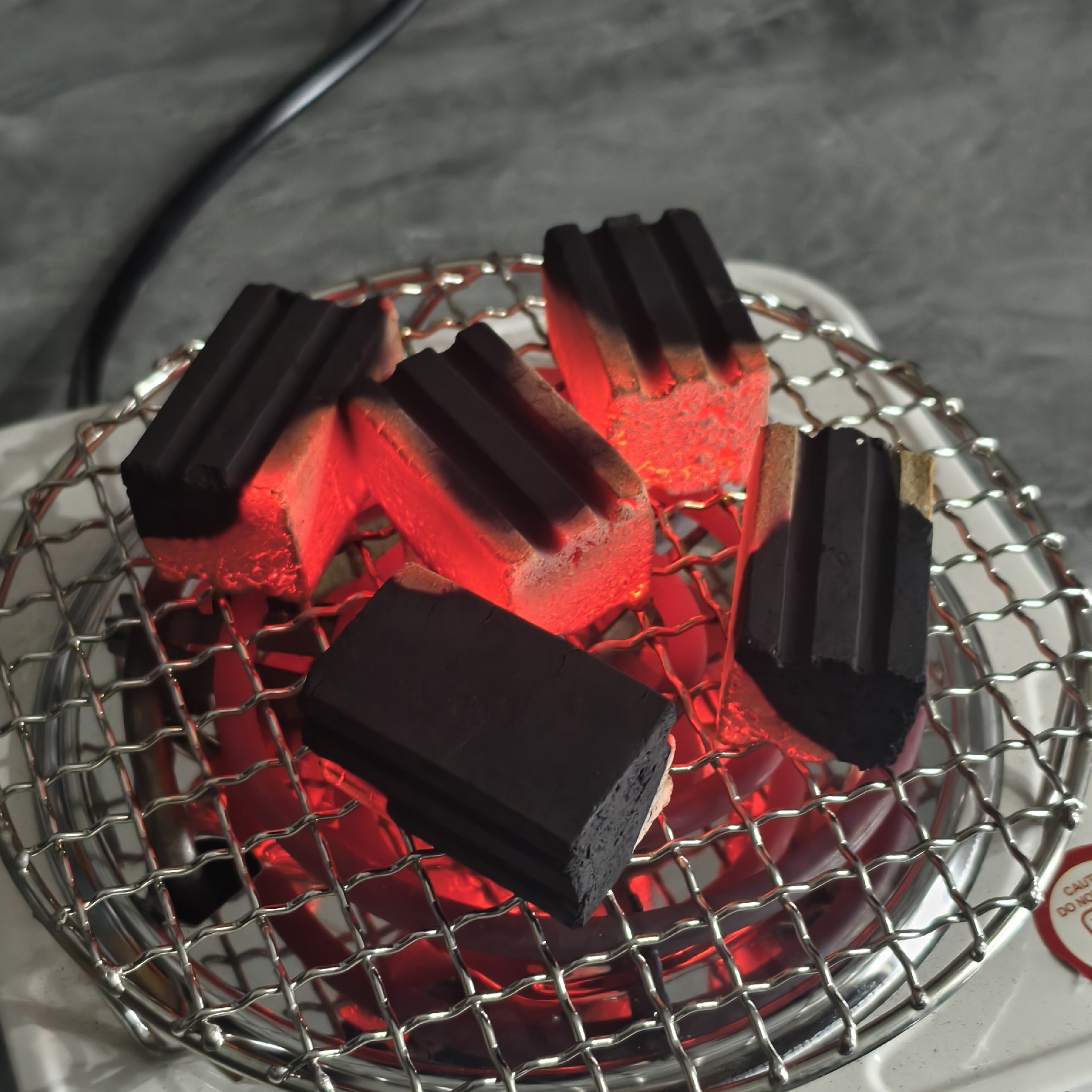 | 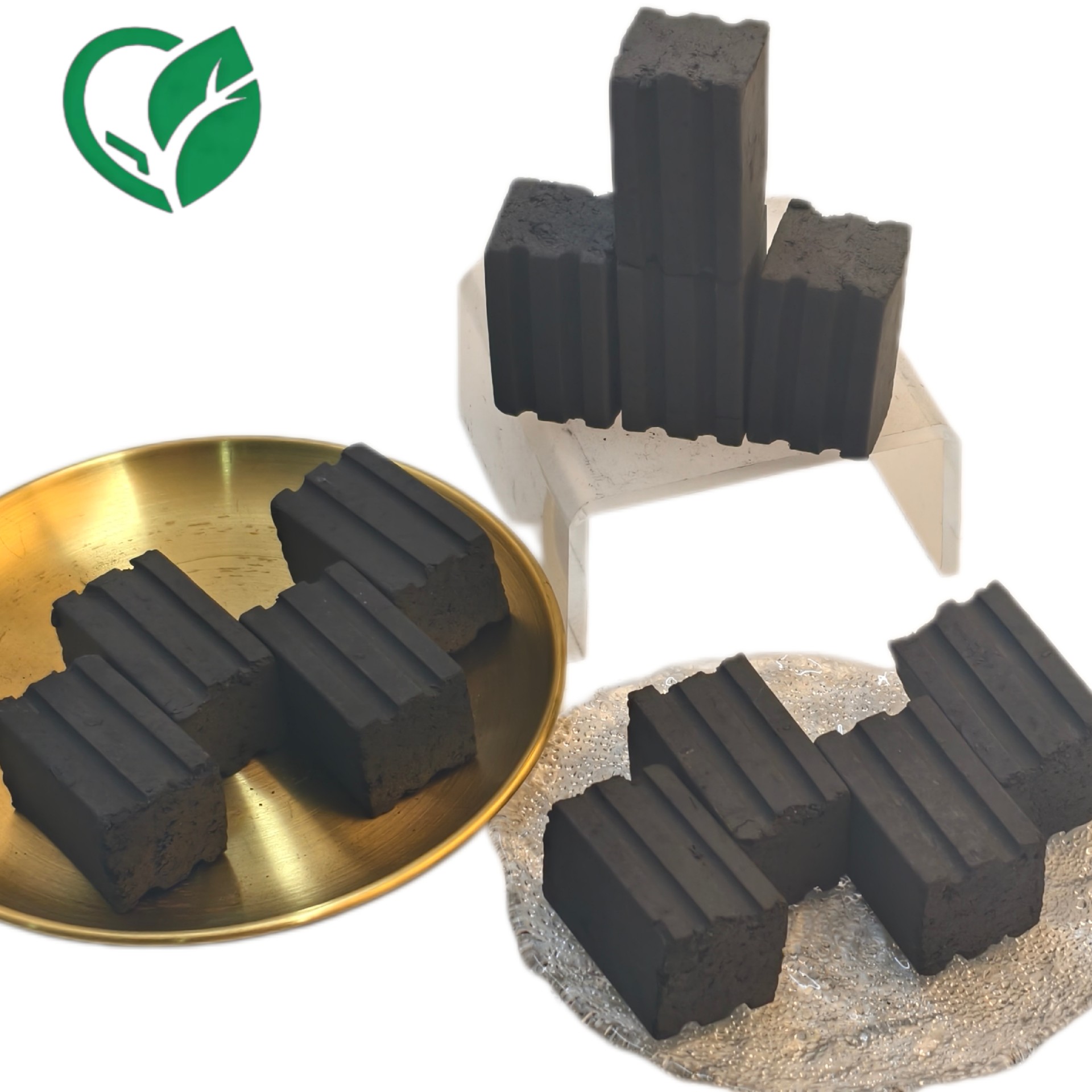 |
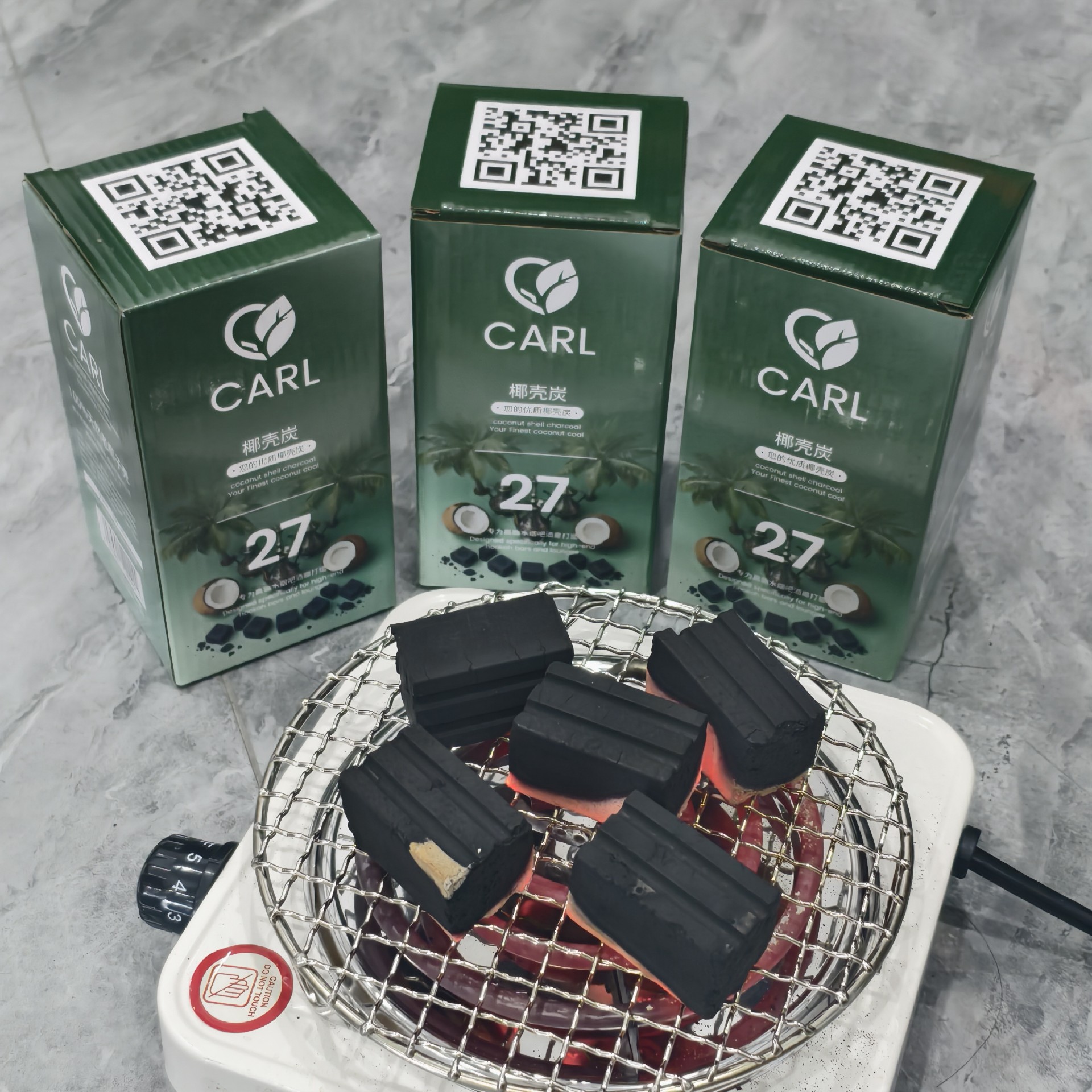
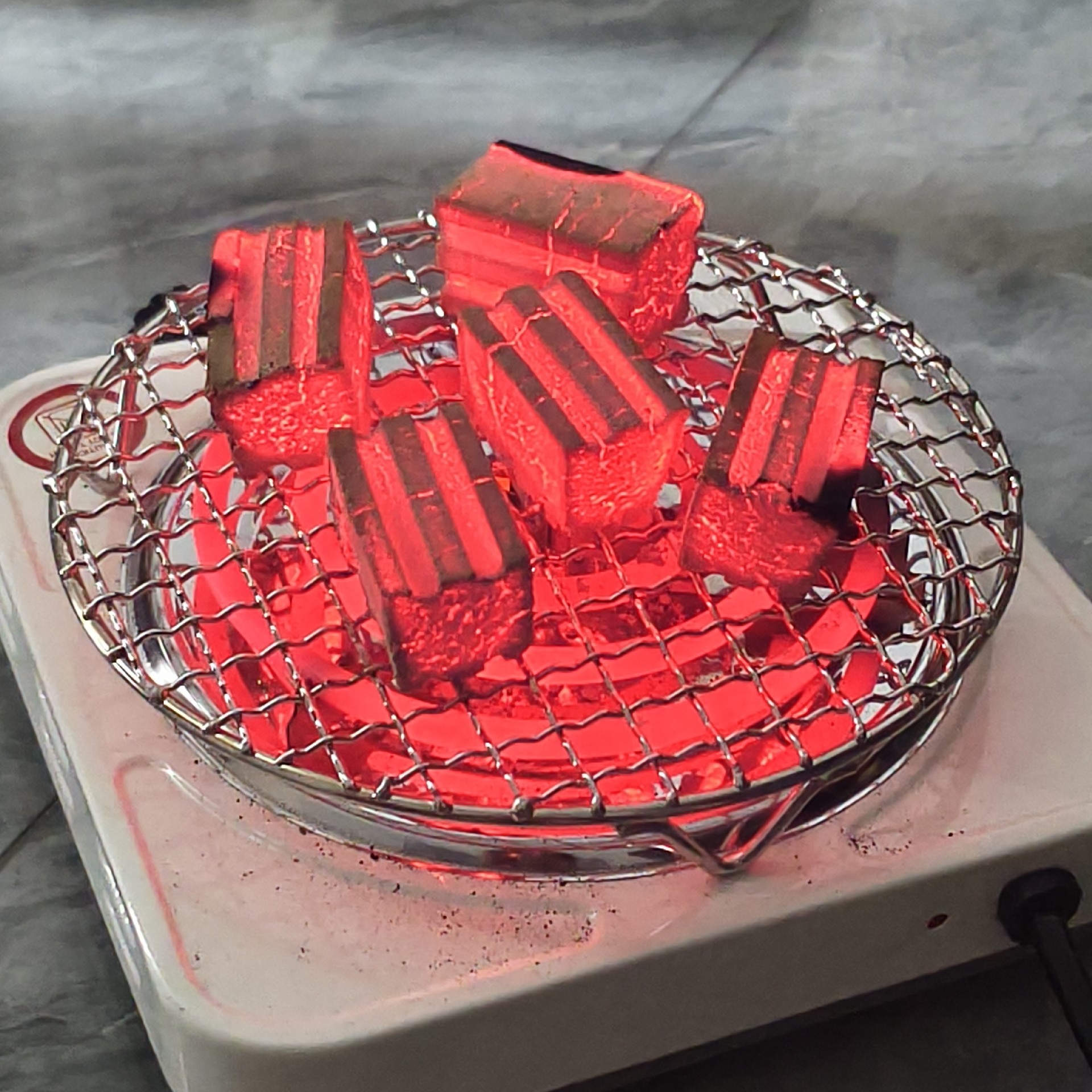
Hookah charcoal is a specially manufactured charcoal product designed to provide stable and controlled heat for shisha and hookah applications.
Unlike ordinary charcoal used for grilling or general fuel purposes, hookah charcoal requires strict control over:
Burning duration
Heat output
Ash content
Odor
Density
Mechanical strength
Product consistency
For many premium hookah markets, Coconut Shell Hookah Charcoal has become the preferred choice because coconut shells provide a dense carbon structure and can produce charcoal briquettes with long burn time, stable heat, and low odor when properly processed.
But how is hookah charcoal actually made?
The production process involves several key stages:
Selecting suitable raw materials
Drying and preparing coconut shells
Carbonization to produce charcoal
Crushing charcoal into powder
Mixing charcoal powder with binders
Compressing and shaping briquettes
Drying and curing finished charcoal
Quality testing and packaging
Each step influences the final performance of the product.
For wholesale buyers, distributors, and private-label brands, understanding the manufacturing process helps evaluate supplier capabilities and select reliable hookah charcoal products.
What Is Hookah Charcoal?
Hookah charcoal is a processed carbon material used as a heat source for hookah smoking.
During use, charcoal is placed on top of a hookah bowl, usually with foil or a heat management device between the charcoal and shisha tobacco.
The heat generated by the charcoal allows the tobacco mixture to release smoke and flavor.
High-quality hookah charcoal should provide:
| Performance Requirement | Importance |
|---|---|
| Stable heat output | Maintains consistent smoking temperature |
| Long burn time | Reduces frequent charcoal replacement |
| Low ash production | Improves cleanliness and user experience |
| Low odor | Prevents interference with flavor |
| Strong structure | Reduces breakage during transportation |
| Consistent size | Ensures predictable heat performance |
The final quality of hookah charcoal depends on:
Raw material selection
Carbonization technology
Briquette production process
Drying conditions
Quality control standards
Raw Materials Used in Hookah Charcoal Production
The first step in the Hookah Charcoal Manufacturing Process is selecting suitable carbon materials.
Common raw materials include:
Coconut shells
Bamboo
Hardwood
Sawdust
Other biomass materials
Among these options, coconut shells are widely used for premium hookah charcoal production.
Why Coconut Shells Are Preferred for Hookah Charcoal
Coconut Shell Hookah Charcoal is widely used because coconut shells naturally contain a dense carbon structure.
After proper carbonization, coconut shell charcoal can provide:
High density
Long burning time
Stable heat release
Low odor
Low ash performance
These characteristics make coconut charcoal briquettes suitable for:
Hookah lounges
Wholesale distributors
Retail brands
Private-label products
Compared with some traditional wood-based charcoal, coconut shell charcoal can offer better consistency when produced under controlled manufacturing conditions.
Other Materials Used for Hookah Charcoal
Although coconut shells are one of the most common premium materials, other materials are also used.
Bamboo Charcoal
Bamboo charcoal can be used for hookah applications because bamboo is a renewable biomass resource.
Its performance depends on:
Bamboo quality
Carbonization method
Density control
Manufacturing process
Wood Charcoal
Wood charcoal has a long history in charcoal production.
Its advantages include:
Flexible raw material supply
Different cost options
However, performance can vary depending on:
Wood species
Carbonization temperature
Processing technology
For premium hookah markets, consistency is usually more important than raw material availability alone.
The Hookah Charcoal Manufacturing Process
The production of hookah charcoal involves several carefully controlled stages.
A professional manufacturer needs to control each step to ensure:
Stable burning performance
Consistent dimensions
Low moisture
Good mechanical strength
1. Selecting and Preparing Coconut Shells
The manufacturing process starts with selecting suitable coconut shells.
High-quality raw materials should have:
Low contamination
Proper dryness
High carbon content potential
Consistent supply quality
Before carbonization, coconut shells are usually cleaned and prepared to remove unwanted materials.
The quality of raw coconut shells directly influences:
Carbon structure
Ash content
Final charcoal performance
2. Drying and Moisture Control
Before carbonization, coconut shells need appropriate drying.
Moisture control is important because excessive water content can affect:
Carbonization efficiency
Carbon quality
Production stability
Proper drying helps create more consistent charcoal characteristics.
3. Carbonization Process
Carbonization is one of the most important steps in producing hookah charcoal.
During this stage, coconut shells are heated under controlled oxygen conditions to remove volatile components and convert the shells into carbon-rich material.
The carbonization process affects:
Fixed carbon content
Ash level
Burning behavior
Density potential
Industrial production may use different carbonization systems, including carbonization furnaces and carbonizers.
The goal is to produce charcoal with suitable characteristics for briquette manufacturing.
4. Crushing and Grinding Charcoal
After carbonization, the charcoal is processed into smaller particles.
The process usually includes:
Crushing
Grinding
Screening
The charcoal powder needs suitable particle size distribution before briquette production.
Proper grinding helps achieve:
Better mixing
More uniform density
Improved briquette strength
5. Mixing Charcoal Powder and Binder
After grinding, charcoal powder is mixed with a suitable binder.
The purpose of the binder is to help:
Hold the briquette shape
Improve mechanical strength
Reduce breakage
For shisha charcoal production, manufacturers generally focus on maintaining:
Low odor
Safe composition
Stable burning performance
The mixing process must be carefully controlled to ensure uniform distribution.
6. Compression and Shaping
The mixed charcoal material is compressed using briquette machines.
This stage determines:
Charcoal density
Shape
Size consistency
Structural strength
Common hookah charcoal shapes include:
Cube charcoal
Hexagon charcoal
Flat charcoal
Finger charcoal
Common cube sizes include:
25mm
26mm
27mm
28mm
Different shapes and sizes are designed for different user preferences and heat management systems.
7. Drying and Curing Finished Hookah Charcoal
After compression and shaping, the newly formed charcoal briquettes still contain moisture from the production process.
The drying and curing stage is essential because it improves:
Hardness
Burning stability
Storage performance
Transportation durability
During this stage, manufacturers carefully control:
Drying temperature
Drying time
Air circulation
Final moisture level
Insufficient drying may cause:
Difficult ignition
Unstable burning
Cracking during storage
Proper curing helps the charcoal achieve a more stable internal structure.
For export products, moisture control is especially important because long-distance transportation may expose charcoal to different climate conditions.
8. Quality Control in Hookah Charcoal Manufacturing
Quality control is a critical part of the Hookah Charcoal Manufacturing Process.
A professional manufacturer should evaluate finished products through multiple quality indicators rather than relying on a single parameter.
Important inspection items include:
| Quality Parameter | Why It Matters |
|---|---|
| Fixed Carbon Content | Indicates carbon concentration and combustion potential |
| Ash Content | Affects cleanliness and user experience |
| Moisture Content | Influences ignition and storage stability |
| Density | Impacts burning duration and heat release |
| Burn Time | Determines practical usage period |
| Ignition Performance | Affects preparation convenience |
| Mechanical Strength | Reduces breakage during handling and shipping |
| Size Accuracy | Ensures consistent heat distribution |
Fixed Carbon Content
Fixed carbon is one of the important indicators used to evaluate charcoal quality.
A higher fixed carbon percentage generally indicates:
Higher carbon concentration
Better combustion efficiency
More stable burning potential
However, fixed carbon should not be considered independently.
A high-quality hookah charcoal product requires a balance between:
Fixed carbon
Density
Ash content
Moisture
Burning characteristics
For example, charcoal with high fixed carbon but poor structure may still experience:
Fast burning
Weak strength
Uneven heat release
Therefore, professional buyers should evaluate overall performance rather than a single laboratory value.
Ash Content
Ash content refers to the inorganic residue remaining after charcoal combustion.
For hookah applications, lower ash production is generally preferred because it helps:
Maintain cleaner operation
Reduce ash accumulation
Improve user experience
Ash performance is influenced by:
Raw material purity
Carbonization process
Manufacturing control
High-quality coconut shell charcoal is often selected because coconut shells naturally contain favorable characteristics for low-ash charcoal production.
Moisture Content
Moisture content affects:
Ignition speed
Burning stability
Storage life
Product weight
Excess moisture may result in:
Longer ignition time
Reduced heat output
Lower combustion efficiency
For international shipments, moisture control and packaging quality are especially important.
Hookah Charcoal Specifications and Product Varieties
Finished hookah charcoal products are available in different specifications to meet different market requirements.
Important product specifications include:
Size
Shape
Weight
Density
Burn duration
Packaging format
Common Hookah Charcoal Sizes
| Size | Typical Application |
|---|---|
| 22mm–25mm Cube | Flexible heat control and shorter sessions |
| 26mm Cube | Common commercial specification |
| 27mm Cube | Balanced heat and duration |
| 28mm Cube | Long sessions and stable heat demand |
The correct size depends on:
Bowl type
Heat management device
User preference
Session duration
Common Hookah Charcoal Shapes
Cube Hookah Charcoal
Cube charcoal is the most widely used format in global markets.
Advantages:
Easy packaging
Consistent dimensions
Stable heat distribution
Suitable for large-scale production
Hexagon Hookah Charcoal
Hexagonal charcoal provides an alternative design with different airflow and heat distribution characteristics.
It is often selected by brands looking for:
Product differentiation
Specific heat behavior
Unique appearance
Flat Coconut Charcoal
Flat charcoal has a larger surface area compared with traditional cubes.
It may provide:
Different heat release characteristics
Alternative heat management options
Finger Hookah Charcoal
Finger-style charcoal is used in some regional markets.
Its application depends on:
Local user preference
Equipment compatibility
Market demand
Why Coconut Shell Hookah Charcoal Is Preferred
Coconut Shell Hookah Charcoal has become one of the most recognized premium charcoal products in international shisha markets.
Its popularity comes from the combination of:
Raw material advantages
Manufacturing control
Stable performance
Long Burning Time
Coconut shell charcoal typically has a dense structure.
This allows the charcoal briquette to:
Burn gradually
Maintain heat longer
Reduce replacement frequency
Long burning time is especially valuable for:
Hookah lounges
Commercial users
Extended sessions
Stable Heat Output
Stable heat is one of the most important requirements for professional hookah users.
Premium coconut charcoal can provide:
Consistent temperature
Reduced heat fluctuation
Easier heat management
This helps users maintain a better overall experience.
Low Odor Performance
Charcoal quality can directly influence the flavor experience.
Poor-quality charcoal may produce:
Strong ignition odor
Unwanted smells
Flavor interference
Properly manufactured coconut shell charcoal is preferred because it generally produces:
Cleaner burning
Lower odor
Less impact on shisha flavor
Strong Mechanical Structure
During international supply, hookah charcoal may experience:
Packaging pressure
Container transportation
Warehouse handling
Retail movement
Strong charcoal briquettes help reduce:
Cracking
Powder generation
Product loss
This is especially important for wholesale buyers.
Environmental Advantages of Coconut Shell Charcoal
Coconut shell charcoal is also valued because coconut shells are agricultural by-products.
Using coconut shells for charcoal production can:
Improve biomass utilization
Reduce agricultural waste
Support circular resource use
For brands targeting environmentally conscious consumers, sustainable sourcing can become an additional market advantage.
Hookah Charcoal Factory Production Equipment
A complete Hookah Charcoal Manufacturing Process requires multiple production stages and equipment.
Common equipment includes:
| Equipment | Function |
|---|---|
| Carbonization Furnace / Carbonizer | Converts coconut shells into charcoal |
| Crusher | Processes charcoal into smaller particles |
| Grinder | Produces suitable charcoal powder |
| Mixer | Combines charcoal powder and binder |
| Briquette Machine | Compresses charcoal into shapes |
| Dryer | Removes moisture after shaping |
| Packing Machine | Prepares finished products for shipment |
The purpose of production equipment is not only increasing output, but also maintaining:
Product consistency
Size accuracy
Stable quality
For wholesale customers, manufacturing capability is an important factor when evaluating suppliers.
Wholesale Buying Guide for Hookah Charcoal
For importers, distributors, and hookah businesses, choosing a reliable supplier is as important as choosing the charcoal itself.
A professional supplier should provide:
Stable production capacity
Consistent specifications
Quality documentation
Custom packaging options
Reliable delivery
What Buyers Should Check Before Purchasing
Before placing a bulk order, buyers should evaluate:
Product Quality
Check:
Raw material source
Product specifications
Test reports
Sample performance
Production Capability
Understand:
Factory capacity
Manufacturing process
Quality control system
Production consistency
Packaging Options
Professional suppliers may provide:
Retail boxes
Customized packaging
Private-label printing
Export cartons
Private Label Hookah Charcoal
Many brands choose private-label production to build their own hookah charcoal products.
Customization options may include:
Brand logo
Packaging design
Charcoal size
Charcoal shape
Carton specifications
Private-label cooperation allows companies to enter the market without establishing their own production facilities.
Storage and Handling of Hookah Charcoal
Proper storage helps maintain product performance throughout the supply chain.
Recommended storage conditions:
Dry warehouse environment
Moisture-resistant packaging
Good ventilation
Protection from direct water exposure
Poor storage conditions may affect:
Ignition performance
Burning stability
Product appearance
For international transportation, packaging quality plays an important role in maintaining product condition.
Frequently Asked Questions About Hookah Charcoal Manufacturing
How is hookah charcoal made?
Hookah charcoal is typically made through a multi-step manufacturing process:
Selecting raw materials such as coconut shells
Drying and preparing the raw materials
Carbonizing the materials into charcoal
Crushing charcoal into powder
Mixing charcoal powder with binder materials
Compressing the mixture into briquettes
Drying and curing the finished charcoal
Testing quality before packaging
For premium products, Coconut Shell Hookah Charcoal is commonly used because coconut shells can produce dense charcoal with stable burning performance.
What kind of charcoal is used for hookah?
The most common types of charcoal used for hookah include:
Coconut shell charcoal
Bamboo charcoal
Wood charcoal
Quick-light charcoal
Among these options, coconut shell charcoal is widely preferred for premium hookah applications because it usually provides:
Longer burn time
Stable heat output
Lower odor
Strong structure
Lower ash performance
The best choice depends on the intended market, usage scenario, and required product specifications.
Why is coconut shell charcoal preferred for hookah?
Coconut shell charcoal is preferred because coconut shells naturally provide a dense carbon structure.
After proper carbonization and briquette production, coconut charcoal can offer:
High density
Long burning duration
Stable heat release
Low odor
Good mechanical strength
These characteristics make it suitable for:
Hookah lounges
Wholesale markets
Premium retail brands
Private-label products
What are the main raw materials for hookah charcoal?
The main raw materials include:
Coconut shells
Bamboo
Hardwood
Sawdust
Other biomass materials
For premium hookah charcoal production, coconut shells are one of the most commonly selected materials due to their carbon structure and performance characteristics.
What is the manufacturing process of coconut shell hookah charcoal?
The production process of coconut shell hookah charcoal generally includes:
1. Coconut shell preparation
Selecting and cleaning suitable coconut shells.
2. Carbonization
Converting coconut shells into carbon-rich charcoal under controlled conditions.
3. Crushing and grinding
Processing charcoal into suitable powder.
4. Mixing
Combining charcoal powder with binder materials.
5. Briquetting
Compressing the mixture into desired shapes and sizes.
6. Drying and curing
Removing moisture and improving product strength.
7. Quality inspection and packaging
Testing specifications before shipment.
What machines are used to make hookah charcoal?
A professional hookah charcoal production line may include:
Carbonization equipment
Charcoal crusher
Charcoal grinder
Powder mixer
Briquette press machine
Drying system
Packing machine
Different production scales require different equipment configurations.
For wholesale suppliers, production equipment helps maintain:
Stable output
Consistent product quality
Accurate dimensions
What binder is used in shisha charcoal production?
Binder materials are used to help charcoal powder maintain its shape after compression.
A suitable binder should help achieve:
Good briquette strength
Stable shape
Low odor
Good burning performance
The specific binder system depends on the manufacturer's production technology and product requirements.
Professional manufacturers focus on ensuring that the final charcoal meets performance requirements rather than relying only on the binder type.
What sizes of hookah charcoal are available?
Common hookah charcoal sizes include:
| Size | Application |
|---|---|
| 25mm Cube | Flexible heat control |
| 26mm Cube | Common commercial specification |
| 27mm Cube | Balanced heat performance |
| 28mm Cube | Longer sessions |
Custom sizes can also be produced according to customer requirements.
What shapes of hookah charcoal can be produced?
Common shapes include:
Cube charcoal
Hexagon charcoal
Flat charcoal
Finger charcoal
Custom shapes
Cube charcoal remains the most widely used format because of its:
Easy handling
Stable heat distribution
Convenient packaging
How long does hookah charcoal burn?
Burn time depends on:
Charcoal size
Density
Raw material
Manufacturing process
Airflow conditions
Heat management method
Larger and denser charcoal briquettes generally provide longer burning performance.
However, professional buyers should evaluate:
Effective heat duration
Heat stability
Actual usage performance
rather than only the longest claimed burn time.
Does hookah charcoal affect shisha flavor?
Yes.
Charcoal quality can influence the overall hookah experience.
Factors that may affect flavor include:
Burning odor
Raw material quality
Carbonization process
Additives
Ash production
High-quality coconut shell charcoal is often preferred because it produces cleaner heat with less impact on flavor.
How should hookah charcoal be stored?
Hookah charcoal should be stored in a dry environment.
Recommended practices include:
Keeping products away from moisture
Using sealed packaging
Maintaining warehouse ventilation
Avoiding direct contact with water
Protecting products during transportation
Proper storage helps maintain:
Ignition performance
Burning stability
Product quality
Can hookah charcoal be customized for private-label brands?
Yes.
Many manufacturers provide private-label hookah charcoal services.
Customization options may include:
Brand packaging
Logo printing
Product size
Product shape
Carton design
Packaging quantity
Private-label production is commonly used by:
Hookah brands
Distributors
Importers
Lounge suppliers
Quick Guide: Hookah Charcoal Manufacturing Process
| Production Stage | Main Purpose |
|---|---|
| Raw Material Selection | Ensures suitable carbon quality |
| Drying | Controls moisture level |
| Carbonization | Produces charcoal structure |
| Crushing | Creates suitable particle size |
| Mixing | Combines charcoal powder and binder |
| Briquetting | Forms charcoal shape |
| Drying and Curing | Improves strength and stability |
| Quality Testing | Ensures product consistency |
| Packaging | Protects products during shipping |
Final Guide: Choosing a Reliable Hookah Charcoal Manufacturer
Understanding How Is Hookah Charcoal Made helps buyers evaluate product quality from the source.
A reliable hookah charcoal manufacturer should provide more than finished products. They should demonstrate control over the entire manufacturing process, including:
Raw material selection
Carbonization technology
Briquette production
Drying control
Quality inspection
Packaging standards
For premium markets, Coconut Shell Hookah Charcoal remains one of the most widely selected options because it provides a strong balance of:
Long burning time
Stable heat output
Low odor
Good mechanical strength
Consistent performance
For wholesale buyers, distributors, and private-label brands, selecting the right supplier requires evaluating:
Product specifications
Manufacturing capability
Quality control system
Customization options
Long-term supply stability
The production process behind hookah charcoal determines the final user experience. From selecting coconut shells to producing finished briquettes, every manufacturing stage influences the quality, reliability, and market value of the final product.
Recommended Reading
2026-09-20
Activated Carbon for Gold Recovery: CIP, CIL Process, Carbon Selection and Regeneration Guide
2026-09-30
Activated Carbon Dosage Calculation: How to Size GAC and PAC for Water Treatment
2026-08-10
Activated Carbon for Biogas Purification: Efficient H₂S and Siloxane Removal Solution
2026-09-24
Activated Carbon for Sugar Decolorization: Process, Selection Guide and Common Problems
2026-07-03
Get a customized solution
Filling in your phone and email information will help us get in touch with you in a timely manner and resolve your issue as soon as possible.